
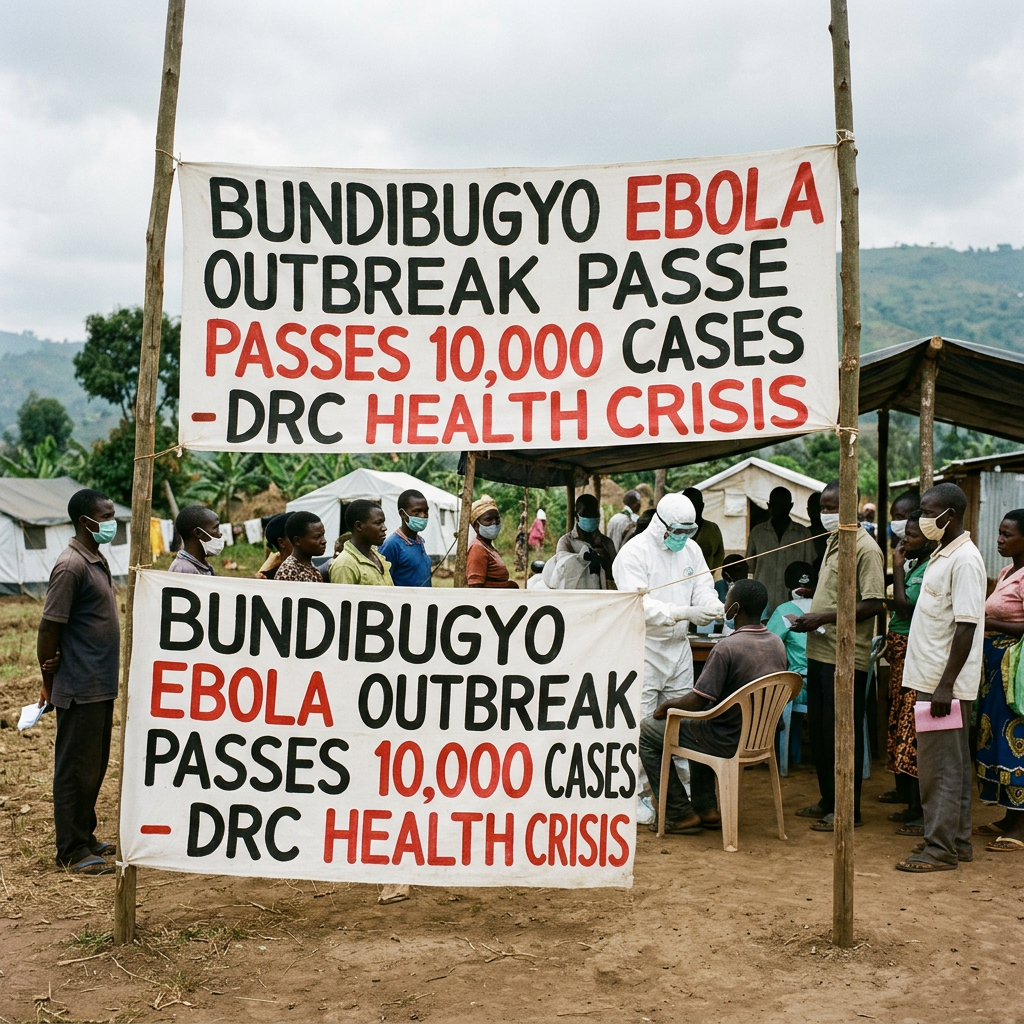
An outbreak of disease caused by Bundibugyo virus, one of the species of Ebola virus, has become the defining global health story of this autumn. According to the latest World Health Organization bulletin, the situation in the Democratic Republic of the Congo keeps getting worse, and a handful of patients have already been flown to Europe for treatment.
The numbers in early November
As of November 3, 2026, the DRC had reported 10,668 confirmed cases, including 5,198 deaths, a case fatality rate of about 48.7%. The disease has reached 67 health zones across eight provinces, with active transmission in 51 of them.
In just three weeks, from mid-October to November 3, 1,463 new confirmed cases were reported. The main hotspots:
- Ituri, the hardest-hit province: 7,485 cases and 3,532 deaths
- North Kivu: 2,593 cases and 1,422 deaths, with the highest fatality rate at 54.8%
- Haut-Uélé: 470 cases and 208 deaths
One of the most worrying signs is how many people die at home without reaching a hospital. Of the 512 deaths reported since October 21, 335 happened in the community and only 177 in treatment centres. WHO says this points to problems with early detection and access to care, especially for young children.
Spread beyond the Congo
Since the outbreak was declared on May 15, 2026, cases have been reported in five countries: the DRC, France, Kenya, Nigeria and Uganda. The outbreaks in France and Uganda were brought under control in August.
Kenya has recorded 9 cases and 2 deaths, all linked to a single imported patient and that person’s contacts, including four health workers. Kenya has had no new cases since October 19. Nigeria reported one imported case, and the patient was evacuated to Geneva for treatment.
On November 5, the United Kingdom reported that a health worker with a confirmed infection, contracted in the DRC, had been evacuated to London.
Is there a vaccine or treatment?
The core problem is that there are no approved vaccines or specific treatments for Bundibugyo virus disease yet. Existing Ebola vaccines were designed against a different species, Zaire ebolavirus.
There is some good news, though. On October 23, a pivotal Phase 2/3 vaccine trial called Tumaini began enrolling participants in Bunia. WHO expert groups recommended adding two candidates to it:
- ChAdOx1, developed by the University of Oxford with the Serum Institute of India
- mRNA-1469, an mRNA vaccine from Moderna
While the vaccines are being tested, WHO stresses that fast diagnosis, testing and good supportive care can lower the death rate.
How dangerous is it for the rest of the world?
In its August 14 assessment, WHO rated the risk as “very high” in the DRC, “high” in neighbouring countries, and “low” for the rest of Africa and the world. That assessment is now being revised as new data comes in.
WHO advises against travel or trade restrictions on affected countries. Instead, it is focusing on border surveillance, monitoring at points of entry and rapid isolation of patients.
What travellers should know
- Before travelling to Central or East Africa, check official updates from WHO and your government’s travel advice service.
- Ebola does not spread through the air. Infection happens through contact with the body fluids of someone who is sick or has died of the disease.
- If you develop fever, weakness, vomiting or bleeding within 21 days of returning, see a doctor straight away and tell them where you have been.
The bottom line
The Bundibugyo outbreak is one of the largest Ebola epidemics on record. Surveillance and the evacuation of patients to specialist centres are keeping the rest of the world safe for now, but without a vaccine, controlling the outbreak in the Congo is extremely difficult. The Tumaini trial could be a turning point.
